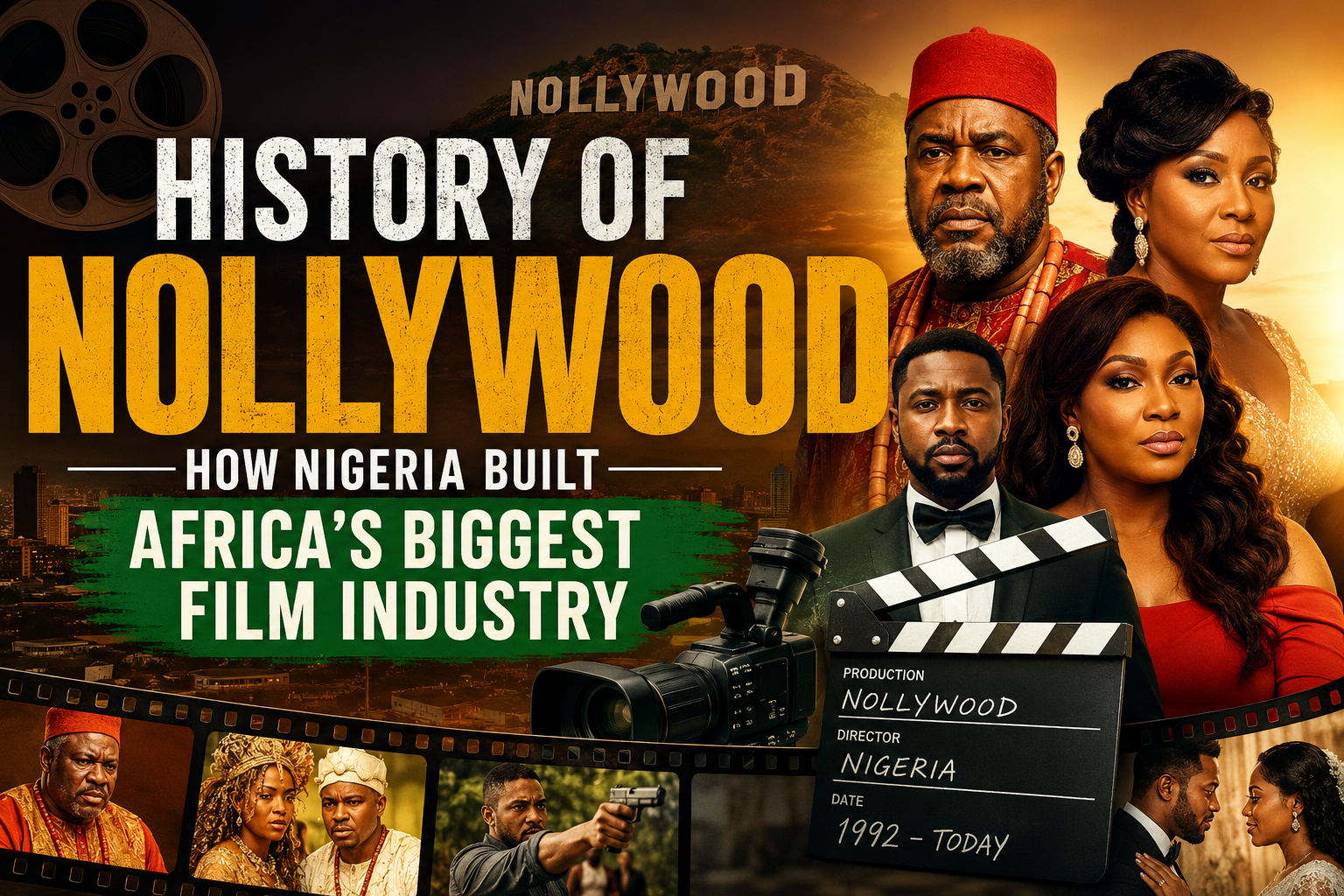
Nigeria’s film industry, popularly known as Nollywood, has become one of the largest movie industries in the world. From low-budget productions sold on VHS tapes to movies streaming globally on Netflix and Amazon Prime, Nollywood’s journey is one of creativity, resilience, and cultural pride.
Today, Nollywood is not only Africa’s biggest film industry but also one of the most influential entertainment sectors worldwide. Millions of people across Africa, Europe, America, and the Caribbean watch Nigerian movies daily.
But how did it all begin?
In this article, we’ll explore the complete history of Nollywood, how Nigeria built Africa’s biggest film industry, the challenges it faced, and why Nollywood continues to grow globally.
What Is Nollywood?
Nollywood is the nickname for Nigeria’s movie industry. The term was inspired by Hollywood in the United States and Bollywood in India.
Nollywood produces thousands of movies every year, making it one of the world’s most productive film industries by volume.
The industry is famous for:
- Drama-filled family stories
- Romance and comedy movies
- African traditions and culture
- Religious and spiritual themes
- Crime and action stories
- Inspirational real-life storytelling
Nollywood movies are mostly produced in English, Yoruba, Igbo, Hausa, and Nigerian Pidgin.
The Early Days of Nigerian Cinema
Before Nollywood became popular, Nigeria already had a growing entertainment culture.
Colonial Era and Traveling Theatre
In the 1960s and 1970s, local theater groups traveled from town to town performing stage plays. These performances were especially popular among the Yoruba people in southwestern Nigeria.
Legendary entertainers like:
- Hubert Ogunde
- Duro Ladipo
- Moses Olaiya (Baba Sala)
helped shape Nigeria’s early entertainment industry.
These traveling theatre groups later moved into filmmaking when television became more popular.
The Rise of Television Drama
By the 1980s, Nigerian television stations started producing local dramas and comedy shows.
Popular classics included:
- Mirror in the Sun
- Checkmate
- Cockcrow at Dawn
- Village Headmaster
These TV productions helped Nigerians develop interest in locally made stories instead of relying only on foreign movies.
However, movie production was still expensive because filmmakers used celluloid film technology, which required large budgets.
How Nollywood Officially Began
The Birth of Nollywood in 1992
Most historians believe Nollywood officially began in 1992 with the release of the movie Living in Bondage.
The movie was produced by Kenneth Nnebue and became a massive success across Nigeria.
Why Living in Bondage Changed Everything
The film was revolutionary because:
- It was produced directly on VHS cassette
- It was affordable to make
- It focused on relatable Nigerian stories
- It reached ordinary people easily
The movie told the story of a man involved in ritual practices for wealth, a topic many Nigerians found both entertaining and culturally relevant.
After its success, many entrepreneurs rushed into movie production.
This moment marked the true beginning of Nollywood.
The VHS Era: Nollywood’s Explosion
Cheap Production Changed the Industry
One major reason Nollywood grew quickly was affordability.
Unlike Hollywood movies that required millions of dollars, Nollywood films were produced with smaller budgets.
Filmmakers used:
- VHS cameras
- Basic editing equipment
- Simple locations
- Local actors
Movies were sold in markets and video rental shops across Nigeria.
This direct-to-video system helped Nollywood expand rapidly.
Alaba International Market’s Role
The famous Alaba International Market in Lagos became the center of Nollywood distribution.
Movie marketers financed productions and distributed films nationwide.
Without Alaba marketers, Nollywood might not have grown as fast as it did.
The market became a powerful force in deciding:
- Which movies got funded
- Which actors became stars
- Which genres became popular
The Golden Era of Nollywood
Famous Stars That Built Nollywood
During the late 1990s and early 2000s, many actors became household names.
Popular Nollywood legends included:
Male Actors
- Pete Edochie
- Kanayo O. Kanayo
- Ramsey Nouah
- Jim Iyke
- Nkem Owoh (Osuofia)
Female Actors
- Genevieve Nnaji
- Omotola Jalade-Ekeinde
- Rita Dominic
- Mercy Johnson
- Ini Edo
These actors helped popularize Nigerian movies across Africa.
Popular Nollywood Genres
Nollywood movies became known for emotional storytelling and cultural themes.
Some of the most popular genres included:
Family Drama
Stories about marriage, betrayal, inheritance, and parenting.
Romance
Love stories filled with emotional twists.
Comedy
Funny village and city-life stories.
Traditional and Spiritual Movies
Films involving African traditions, village customs, and spiritual themes.
Crime and Action
Urban gangster and corruption-related stories.
How Nollywood Conquered Africa
African Audiences Loved Nigerian Stories
Nigerian movies spread quickly across countries like:
- Ghana
- Kenya
- South Africa
- Cameroon
- Uganda
Many Africans connected with Nollywood because the stories reflected African realities and traditions better than Western films.
Soon, Nollywood stars became celebrities across the continent.
Satellite TV Boosted Nollywood
Television channels like Africa Magic helped Nollywood reach millions of homes.
This exposure increased:
- Movie popularity
- Actor fame
- Industry revenue
- International recognition
Africa Magic became one of the biggest promoters of Nigerian films.
Nollywood Goes Global
Streaming Platforms Changed Everything
The rise of the internet and streaming services transformed Nollywood completely.
Platforms like Netflix, YouTube, and Amazon Prime Video introduced Nigerian movies to global audiences.
High-quality productions started gaining international attention.
Examples include:
- The Wedding Party
- King of Boys
- Lionheart
- Aníkúlápó
These films showed that Nollywood could compete internationally.
Improved Production Quality
Modern Nollywood now focuses more on:
- Better cinematography
- Professional editing
- Stronger storytelling
- Advanced sound quality
- International collaborations
Many Nigerian filmmakers now attend global film festivals and work with foreign studios.
Challenges Facing Nollywood
Despite its success, Nollywood still faces many problems.
Piracy
Illegal copying remains one of the industry’s biggest challenges.
Many producers lose millions of naira because movies are duplicated illegally.
Limited Funding
Many filmmakers still struggle to secure large budgets for quality productions.
Unlike Hollywood studios, Nollywood investors are often limited.
Poor Infrastructure
Some filmmakers face challenges with:
- Electricity supply
- Expensive equipment
- Limited cinema access
- Distribution problems
Competition From Foreign Content
Streaming platforms expose audiences to international content, increasing competition for Nigerian filmmakers.
Why Nollywood Continues to Grow
Strong Storytelling Culture
Nigerians naturally love storytelling, and Nollywood continues to reflect real African experiences.
This emotional connection keeps audiences interested.
Young Creative Talents
New filmmakers, actors, editors, and content creators continue entering the industry.
Social media also helps young talents become popular quickly.
Government and Private Support
Organizations and investors are beginning to support the creative industry more seriously.
The Nigerian government has also recognized Nollywood as an important economic sector.
Nollywood’s Impact on Nigeria
Nollywood contributes massively to Nigeria’s economy.
The industry creates jobs for:
- Actors
- Directors
- Makeup artists
- Editors
- Costume designers
- Camera operators
- Writers
- Marketers
It also promotes Nigerian culture globally.
Through Nollywood, many people worldwide now understand:
- Nigerian traditions
- African fashion
- Local languages
- Nigerian music and lifestyle
The Future of Nollywood
The future of Nollywood looks promising.
Experts believe the industry will continue growing because of:
- Streaming technology
- Global demand for African stories
- Improved filmmaking skills
- International partnerships
Nollywood may soon become one of the most powerful cultural industries in the world.
- Related Posts:
◾Zara The Stubborn Girl And Her Single Father – A Touching New Nigerian Movie
◾Must-See Nollywood Movies on Chika Ike TV Right Now
Final Thoughts
The history of Nollywood is a story of determination, creativity, and cultural pride.
From low-budget VHS movies to global streaming success, Nigeria has built Africa’s biggest film industry through innovation and persistence.
Today, Nollywood stands as proof that African storytelling can reach the world stage.
As technology improves and global interest increases, Nollywood’s influence will likely become even bigger in the coming years.