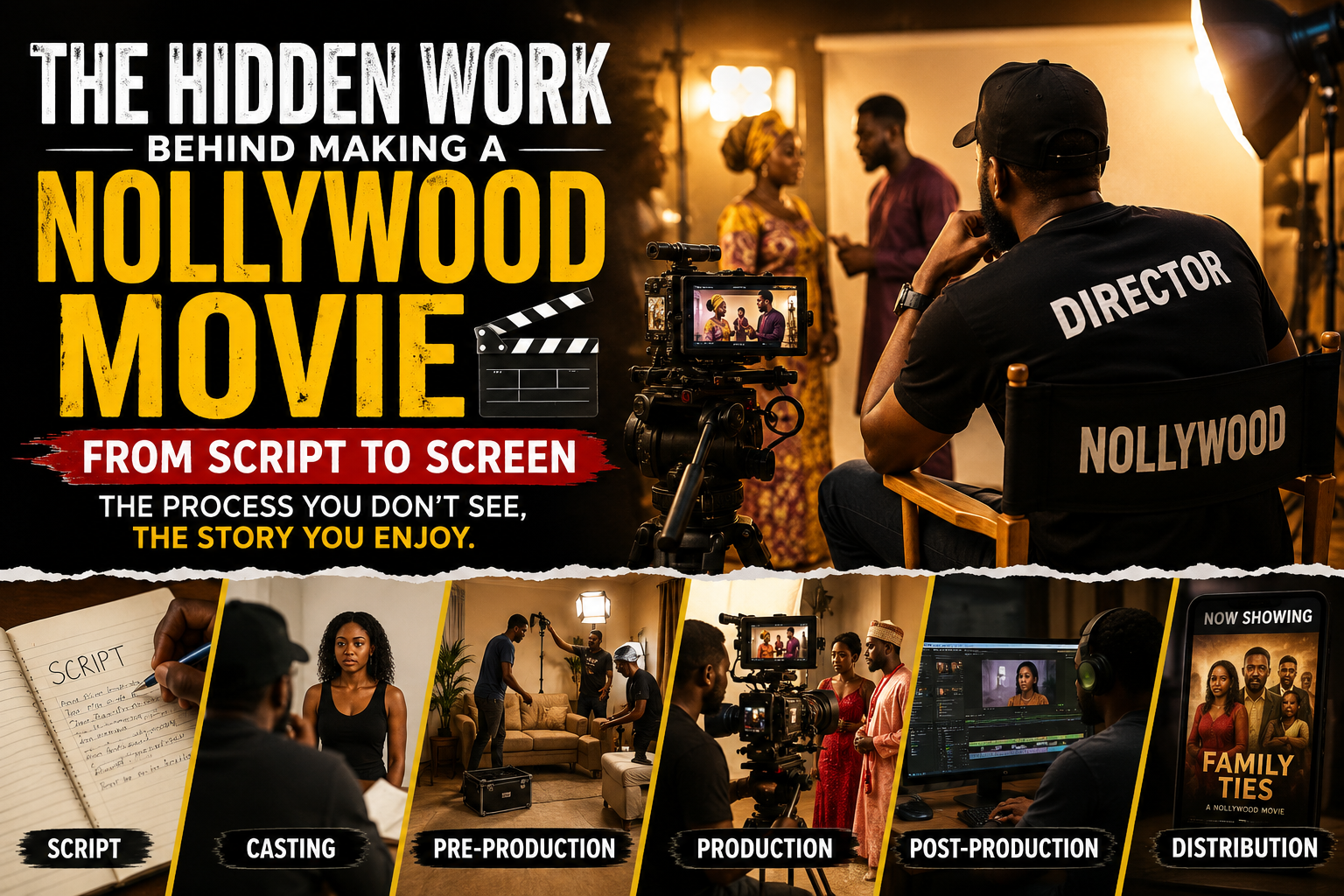
Making a Nollywood movie is not just about cameras, actors, and action. Behind every film you watch is a long chain of planning, stress, creativity, and technical work that most viewers never get to see.
While audiences enjoy the final product in 1–2 hours, the real journey can take weeks or even months of intense effort. From the first idea on paper to the final scene on screen, Nollywood filmmaking is a powerful mix of art, discipline, and hustle.
In this article, we break down the hidden work behind making a Nollywood movie from script to screen, showing you exactly how films come to life in Nigeria’s fast-growing film industry.
1. It All Starts with an Idea (Concept Development)
Every movie begins long before cameras start rolling. It starts with an idea.
This stage is called concept development, and it is one of the most important but underrated parts of filmmaking.
What happens here:
- Writers or producers brainstorm story ideas
- Real-life experiences, social issues, or trends inspire plots
- The idea is shaped into a basic storyline
- Characters and themes are defined
At this stage, there is no script yet—just a strong story direction.
👉 Example: A simple idea like “a young girl struggling to survive in Lagos” can later become a full Nollywood drama film.
2. Scriptwriting – Turning Ideas into a Movie Blueprint
Once the idea is solid, the next step is writing the script.
The script is the foundation of the entire movie, and without a strong script, no Nollywood film can succeed.
What scriptwriters do:
- Develop full dialogues for characters
- Structure scenes (beginning, conflict, climax, ending)
- Build emotional flow and storytelling pace
- Ensure cultural relevance for Nigerian audiences
Why this stage is difficult:
- It can take weeks or months to perfect
- Writers often rewrite scenes multiple times
- Producers may demand changes for budget or marketing reasons
A strong Nollywood script determines whether a movie becomes a hit or a flop.
3. Budgeting and Financial Planning (The Money Reality)
Many people think filmmaking is just creativity—but Nollywood is also a business.
Before filming starts, producers must calculate how much the movie will cost.
Key expenses include:
- Actor and crew salaries
- Location fees
- Equipment rental (cameras, lighting, sound)
- Transport and logistics
- Costumes and makeup
- Post-production editing
Hidden truth:
Most Nollywood productions operate on tight budgets, meaning producers must constantly adjust plans to fit available funds.
4. Casting – Choosing the Right Actors
Casting is one of the most exciting but strategic parts of filmmaking.
Directors don’t just pick popular actors—they choose based on fit for the role.
Casting process includes:
- Auditions (live or recorded)
- Script reading sessions
- Screen tests for chemistry between actors
- Final selection by the director and producer
Why casting matters:
A great actor in the wrong role can ruin a movie, while a perfect match can make a simple story unforgettable.
5. Pre-Production – The Silent Hard Work Phase
Pre-production is where most of the real planning happens—but viewers never see it.
This stage prepares everything before filming begins.
What happens in pre-production:
- Location scouting (finding suitable filming places)
- Set design and decoration planning
- Costume selection and fittings
- Scheduling shoot days
- Technical rehearsals
This phase ensures that when filming starts, everything runs smoothly and efficiently.
6. Production – Lights, Camera, Action! (But Not as Easy as It Looks)
This is the stage everyone recognizes—actual filming.
But behind the scenes, it is one of the most stressful parts of Nollywood filmmaking.
What really happens on set:
- Long working hours (sometimes 12–18 hours daily)
- Multiple retakes of the same scene
- Lighting and sound adjustments
- Managing actors’ emotions and timing
- Unexpected delays (weather, power, traffic, etc.)
Common challenge:
- A single 5-minute scene can take hours to film perfectly.
- Despite the chaos, this is where the story comes alive.
7. Post-Production – Where the Magic Is Refined
After filming ends, the movie is far from finished.
Post-production is where raw footage is turned into a polished film.
Key activities include:
- Video editing and scene arrangement
- Sound editing and background noise removal
- Adding music and sound effects
- Color grading for visual quality
- Subtitles or language adjustments
This stage can make or break the movie’s final quality.
👉 A poorly edited film can feel confusing, even if the story is good.
8. Marketing and Distribution – Getting the Movie to the Audience
Even the best Nollywood movie needs promotion.
Without marketing, no one will know it exists.
Marketing strategies include:
- Movie trailers on YouTube and TV
- Social media promotion (Instagram, TikTok, Facebook)
- Influencer collaborations
- Premiere events and press interviews
Distribution channels:
- Cinemas
- Online streaming platforms
- DVD and digital downloads
This stage determines how widely the movie will be seen and how much profit it generates.
9. The Hidden Challenges Behind Nollywood Film Production
While the final movie looks polished, many struggles happen behind the scenes.
Common challenges include:
- Limited funding and budget constraints
- Power supply issues during filming
- Tight shooting schedules
- Actor availability conflicts
- Weather disruptions for outdoor shoots
Despite these challenges, Nollywood continues to grow as one of the largest film industries in the world.
10. Why Nollywood Movies Still Thrive Despite the Struggles
Nollywood’s strength lies in creativity, speed, and storytelling passion.
Even with limited resources, filmmakers manage to produce engaging stories that connect deeply with African audiences.
Key strengths of Nollywood:
- Strong cultural storytelling
- Fast production speed
- Relatable characters and themes
- Growing global audience
- You May Also Like:
◾Top 10 Nollywood Actors Dominating Social Media Right Now
◾History of Nollywood: How Nigeria Built Africa’s Biggest Film Industry
Conclusion
The hidden work behind making a Nollywood movie is far more complex than what viewers see on screen. From idea creation to scriptwriting, budgeting, filming, and editing, every stage requires dedication, teamwork, and resilience.
Next time you watch a Nollywood film, remember: what you see in 2 hours may have taken weeks or even months of planning, sleepless nights, and countless retakes to create.