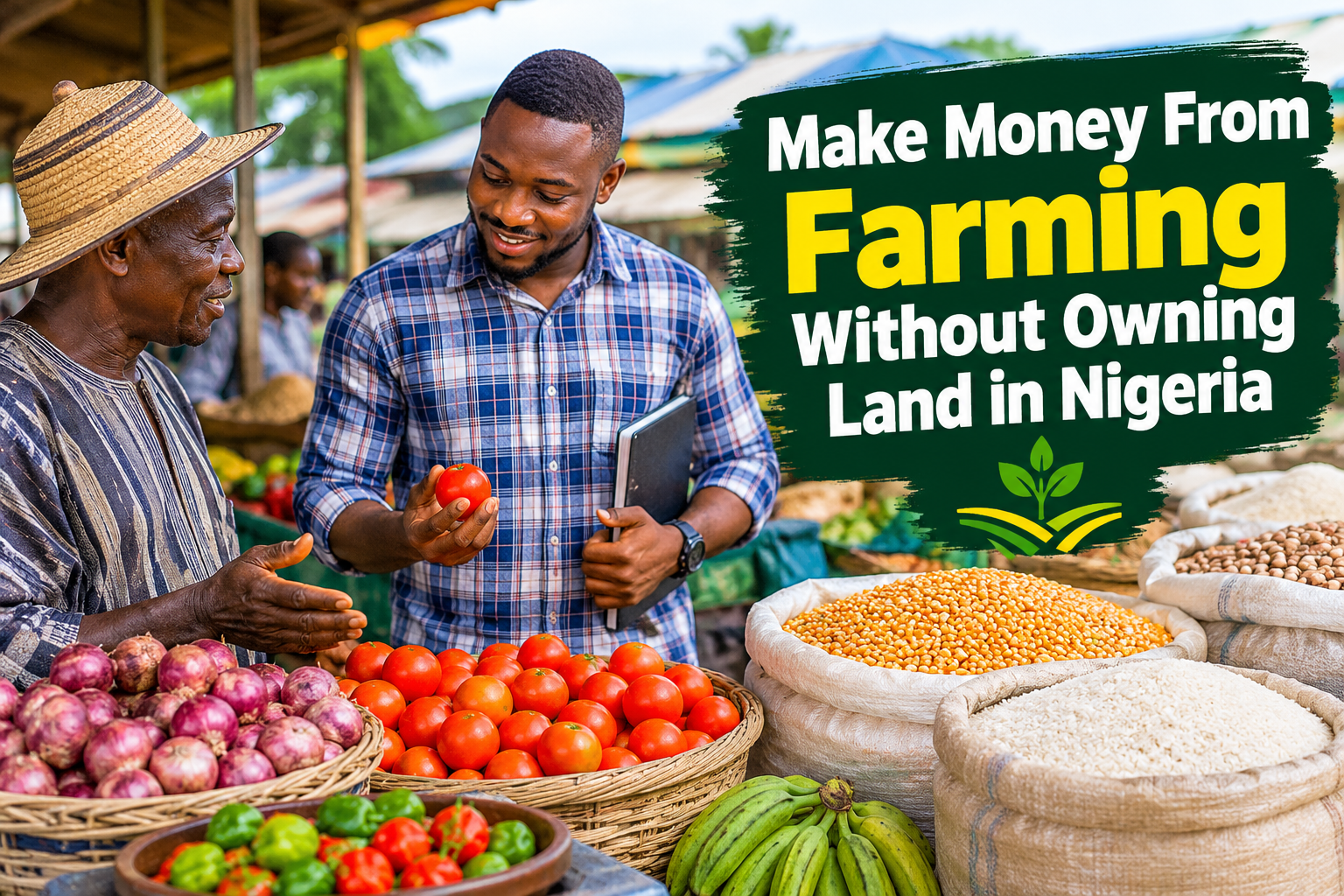
Have you ever wanted to start a farming business but gave up because you don’t have farmland? Perhaps you live in a city, have limited capital, or cannot afford to buy land in a farming community. If that sounds familiar, there is good news: you can make money from agriculture in Nigeria without owning a single plot of farmland.
Agriculture involves much more than planting crops and waiting for harvest. Farmers need people to supply their produce, find buyers, transport goods, process food, and connect them with customers. These activities create opportunities for people who want to earn money from agriculture without becoming traditional landowners.
Whether you live in Lagos, Abuja, Port Harcourt, or a smaller Nigerian town, you can start an agricultural business by focusing on the opportunities that match your budget, location, and skills.
Here are eight practical ways to make money from farming without owning land in Nigeria.
1. Buy Agricultural Produce and Resell It
One of the simplest ways to enter the agricultural business is by buying farm produce from farmers and reselling it to consumers.
Farmers often need buyers who can purchase their produce in reasonable quantities. At the same time, households, market traders, restaurants, and food vendors need a steady supply of food.
You can connect these two groups and earn money from the difference between your buying and selling prices.
For example, you could buy bags of garri, beans, rice, maize, or onions from farmers and wholesalers, then sell them to retailers or consumers.
How to get started
- Identify agricultural products that people in your area buy regularly.
- Contact farmers, cooperatives, and trusted produce dealers.
- Compare buying prices and transportation costs.
- Find potential customers before purchasing large quantities.
- Start with a manageable quantity and increase your stock as sales improve.
The key is to calculate every expense. Your profit is what remains after deducting the purchase price, transportation, packaging, storage, and other business costs.
2. Partner With Farmers Who Already Own Land
You don’t have to own farmland to participate in crop production. Instead, you can partner with someone who already has access to land.
For instance, a farmer might have farmland but lack the money to purchase seeds, fertilizer, or other essential inputs. You could provide some of the funding while the farmer handles cultivation.
You can agree to share the proceeds after harvest or divide the profits according to a written agreement.
Before investing, discuss who will pay for labour, farm inputs, transportation, and other expenses. Also, agree on how losses will be handled if the harvest fails or market prices fall.
Important: Never hand over your money based only on verbal promises. Visit the farm, verify the farmer’s identity, understand the production plan, and document the agreement.
3. Start Contract Farming Through an Established Buyer
Contract farming can provide another route into agriculture without buying land.
In this arrangement, a buyer or agricultural company works with farmers to produce particular crops or livestock products according to agreed requirements. Depending on the arrangement, the buyer may provide inputs, technical guidance, or an agreed market for the produce.
You could participate by working with a farmer who supplies the buyer, helping coordinate production, or investing through a properly structured farming partnership.
For example, a food-processing company may need a regular supply of maize or cassava. A farmer produces the crop, while the company purchases it under agreed terms.
However, don’t assume every contract guarantees profit. Check the buyer’s reputation, pricing arrangements, quality requirements, payment conditions, and responsibility for production losses before committing money.
You can also explore agricultural development initiatives and financing information through the official “National Agricultural Development Fund website” (https://nadf.gov.ng/). Eligibility and programme conditions vary.
4. Become an Agricultural Produce Supplier
Restaurants, hotels, caterers, supermarkets, and food vendors need fresh agricultural products to operate.
You can build a business by supplying these customers with produce purchased from farmers and established markets.
For example, you might supply tomatoes, peppers, onions, plantains, vegetables, eggs, or fresh fish to restaurants and food vendors in your area.
You don’t need to own farmland because your role is to ensure customers receive the products they need at the agreed time and quality.
How to find customers
Start by visiting restaurants, food vendors, and small retailers. Ask what they buy regularly, how much they need, and whether they are satisfied with their current suppliers.
Then identify reliable farmers or wholesalers who can meet those requirements.
Begin with a few customers rather than promising to supply dozens of businesses immediately. Reliable delivery and consistent quality can help you build long-term relationships.
5. Sell Farm Produce Online
The internet provides another way to connect agricultural products with customers.
You can use WhatsApp Business, Facebook, Instagram, TikTok, and other suitable platforms to advertise produce and receive orders.
For example, you could create a WhatsApp catalogue featuring beans, garri, palm oil, rice, dried fish, or fresh vegetables. Customers can view the available products, ask questions, and place orders.
You can also create a simple ordering system for customers who want regular food supplies.
To reduce your financial risk, consider taking confirmed orders before purchasing the goods. This approach can help you avoid tying up too much money in unsold stock.
Be transparent about product quality, quantity, delivery fees, and payment terms. Remember that advertising alone will not guarantee sales; you still need reliable suppliers and customers who are willing to pay.
6. Start a Small Poultry Business Through a Farm Partnership
Poultry farming does not always require you to own land.
You could partner with an existing poultry farmer who has housing, equipment, and the experience needed to raise birds.
Depending on your agreement, you might contribute working capital, purchase feed, arrange sales, or manage customer relationships while your partner handles daily farm operations.
Another option is to focus on marketing eggs from an established poultry farm.
For example, you could purchase eggs in bulk and supply bakeries, restaurants, hotels, shops, and households.
Before investing in poultry production, understand the costs of feed, veterinary care, labour, mortality, and transportation. Agree on who bears these expenses and how income will be shared.
Start small enough that an unexpected loss would not destroy your finances.
7. Make Money by Connecting Farmers With Buyers
Sometimes, farmers don’t need another person to cultivate their land. They need someone who can help them find customers.
This creates an opportunity to work as an agricultural produce broker or marketing agent.
Your job is to connect farmers who have products to sell with buyers who need those products.
For instance, a farmer may have several bags of maize ready for sale but lack contacts with larger buyers. You can help find a buyer and negotiate a transaction.
You may earn a commission if both parties agree to pay you for the service.
To succeed, build relationships with farmers, produce traders, processors, and bulk purchasers. Verify the quality and quantity of available produce before making promises to buyers.
Agree on your commission in advance, and be clear about whether you are acting as an agent or purchasing the produce yourself.
Trust is particularly important in this business because one dishonest transaction can damage your reputation.
8. Start an Agricultural Processing Business
Processing agricultural products can help you earn money without owning farmland.
Instead of growing the raw materials, you purchase them from farmers and transform them into products that customers can use or store more conveniently.
Examples include:
- Processing cassava into garri.
- Turning fresh pepper into packaged dried pepper.
- Packaging beans and grains for retail customers.
- Processing palm fruits into palm oil.
- Producing packaged plantain flour.
You don’t necessarily need to build a processing facility immediately. You could start by working with an existing processor who charges a fee for processing your raw materials.
Before starting, research local demand, processing costs, packaging requirements, food safety rules, and suitable storage conditions.
Choose a product with a realistic market rather than investing heavily in equipment before confirming that customers will buy it.
How to Choose the Best Farming Business Without Land
With several options available, your best choice depends on your financial resources, experience, and access to customers.
Consider these factors before making a decision:
Your starting capital: Produce brokerage and commission-based marketing may require less initial capital than purchasing large quantities of produce or financing crop production.
Your location: If you live in a city, supplying restaurants or selling packaged agricultural products may be more convenient. If you live near farming communities, you may have easier access to farmers and fresh produce.
Your available time: Supplying customers and coordinating farm partnerships require time and regular communication. Choose a model that fits your daily schedule.
Your knowledge: Learn how prices change, how to assess product quality, and how to calculate costs before investing.
Your access to customers: A reliable buyer can be more valuable than a large quantity of produce you cannot sell.
Practical Steps to Start With Limited Money
You don’t need to launch a large agricultural enterprise immediately. Start with a simple plan.
1. Choose one business model. Focus on produce reselling, brokerage, online sales, or another option that suits your circumstances.
2. Research your market. Find out what people buy, how frequently they buy it, and what suppliers charge.
3. Contact potential suppliers. Speak with farmers, wholesalers, and agricultural cooperatives to understand product availability and pricing.
4. Find customers early. Ask retailers, restaurants, households, or food vendors whether they would purchase your products.
5. Calculate your costs. Include transportation, packaging, storage, spoilage, communication, and other expenses.
6. Test the business on a small scale. Complete a few transactions before committing more money.
7. Keep accurate records. Record every purchase, sale, expense, and outstanding payment so you can determine whether the business is actually profitable.
Profitable Agricultural Businesses You Can Start in Nigeria With ₦50,000 or Less
10 Ways to Become a Wealthy Man
Frequently Asked Questions
Can I start farming in Nigeria without owning land?
Yes. You can participate through partnerships with existing farmers, contract farming arrangements, produce trading, agricultural brokerage, processing, and other agricultural businesses that do not require personal land ownership.
Which agricultural business can I start without land and with little money?
Produce brokerage, commission-based marketing, and taking customer orders before sourcing products can be practical starting points. Your actual costs will depend on your location, products, transportation, and business arrangements.
Is it possible to make money from farming without doing the physical farm work?
Yes. You can focus on marketing, sales, sourcing, distribution, or financing a farming partnership. However, these businesses still require management, planning, and careful financial decisions.
Is making money from agriculture guaranteed?
No. Agricultural businesses face risks such as changing market prices, transportation expenses, spoilage, unreliable suppliers, and weak customer demand. Research the market and start at a scale you can afford.
Final Thoughts
Owning farmland is not the only way to make money from agriculture in Nigeria. You can build a business by supplying agricultural products, partnering with farmers, connecting producers with buyers, selling online, or processing raw materials.
The smartest approach is to start with a clear understanding of what customers need and how you will earn a profit. Rather than investing all your money at once, test your idea, establish reliable relationships, and expand when the business begins to show consistent results.
You don’t have to own the land to build an agricultural business. You need a practical plan, reliable partners, and a market for what you sell.