Introduction: Yes, You Can Start Acting from Home
Many successful actors didn’t begin their careers in big studios or film schools. In fact, with today’s digital world, it is now possible to start a career in acting from home using your phone, internet, and consistency.
Platforms like YouTube, TikTok, and online casting websites have made it easier for beginners to get noticed without connections in the industry. Whether you dream of Nollywood, Hollywood, or Netflix productions, your journey can start right from your room.
This guide will show you exactly how to start, build skills, get auditions, and grow your acting career step by step.
What Does It Mean to Start Acting from Home?
Starting acting from home means building your acting skills, portfolio, and visibility without physically attending a film school or studio.
Instead, you focus on:
- Online training and self-learning
- Recording audition tapes at home
- Building a digital acting portfolio
- Applying for virtual auditions
- Using social media to gain visibility
This method is now widely accepted in the entertainment industry.
Step 1: Learn the Basics of Acting
Before anything else, you must understand the foundation of acting.
Key acting skills to learn:
- Emotional expression (crying, laughing, anger on cue)
- Voice control and diction
- Body language and movement
- Script interpretation
- Character development
How to learn from home:
- Watch free acting tutorials on YouTube
- Study films and analyze actors’ performances
- Take online acting courses (Udemy, MasterClass, Coursera)
- Practice monologues daily in front of a mirror
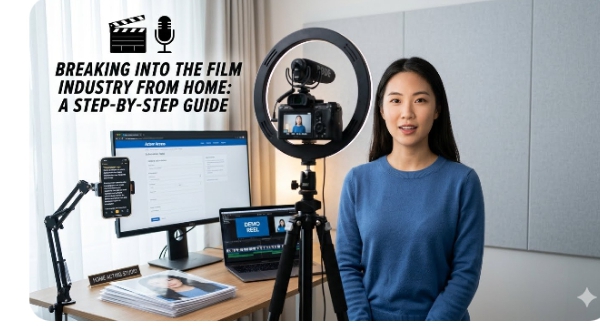
Step 2: Set Up a Simple Home Acting Studio
You don’t need expensive equipment to start.
What you need:
- A smartphone with a good camera
- Natural lighting or a ring light
- A quiet background (plain wall is fine)
- Basic tripod or stable surface
Why this matters:
Casting directors often request self-tape auditions. Your ability to record clear, professional-looking videos at home is very important.
Step 3: Practice Acting Every Day
Consistency is what separates beginners from professionals.
Daily practice routine:
- 10 minutes voice warm-up
- 20 minutes script reading
- 20–30 minutes recording scenes
- Watch and critique your performance
Example exercise:
Pick a short emotional scene (anger, sadness, joy) and perform it in different styles. This helps you build emotional flexibility.
Step 4: Build Your Acting Portfolio
Your portfolio is your acting identity.
What to include:
- Short acting videos (self-tapes)
- Monologues (1–3 minutes)
- Emotional scenes
- Introduction video (who you are and your acting goal)
Pro tip:
Upload your portfolio to:
- YouTube (as unlisted or public)
- Google Drive (for casting links)
- Instagram Reels or TikTok
Step 5: Start Auditioning Online
This is where your career begins to take shape.
Where to find auditions:
- Casting websites
- Facebook acting groups
- Instagram casting pages
- Nollywood and international audition calls
What casting directors look for:
- Confidence on camera
- Clear speech
- Emotional delivery
- Natural performance
Even if you are new, consistency in auditioning increases your chances of getting roles.
Step 6: Use Social Media to Build Visibility
Social media is now a powerful tool for actors.
Best platforms:
- TikTok (short acting skits)
- Instagram Reels
- YouTube Shorts
Content ideas:
- Short emotional scenes
- Funny skits
- Dramatic monologues
- Character role-play videos
Why it works:
Many actors have been discovered through viral content. Your video doesn’t need to be perfect—it just needs to connect emotionally.
Step 7: Learn from Real Actors and Industry Standards
Study successful actors and understand their techniques.
For example:
- How they use facial expressions
- How they deliver dialogue naturally
- How they respond emotionally in scenes
You can also follow film industries like:
- Nollywood (Nigeria)
- Hollywood (USA)
- Bollywood (India)
This helps you understand different acting styles and opportunities.
Step 8: Avoid Common Beginner Mistakes
Many beginners fail because of avoidable errors.
Mistakes to avoid:
- Waiting for “perfect equipment” before starting
- Not practicing consistently
- Ignoring online auditions
- Copying others instead of building originality
- Giving up too early
Remember: acting is skill-based, not equipment-based.
Step 9: Network with Other Actors
Even from home, networking is important.
How to network:
- Join online acting communities
- Engage with casting posts on social media
- Collaborate with other beginners
- Attend virtual acting workshops
Connections often lead to opportunities.
Step 10: Stay Consistent and Patient
Acting is not an overnight success journey.
Some actors take months, others take years before landing major roles. What matters is consistency.
Keep improving by:
- Recording yourself regularly
- Learning new scripts
- Improving your voice and emotional control
- Watching your past performances and correcting mistakes
Final Advice: Start Small, Start Now
The biggest mistake aspiring actors make is waiting for the “right time.” The truth is, your phone is already enough to begin.
Start recording today. Practice daily. Apply for auditions consistently. Growth comes with repetition, not perfection.