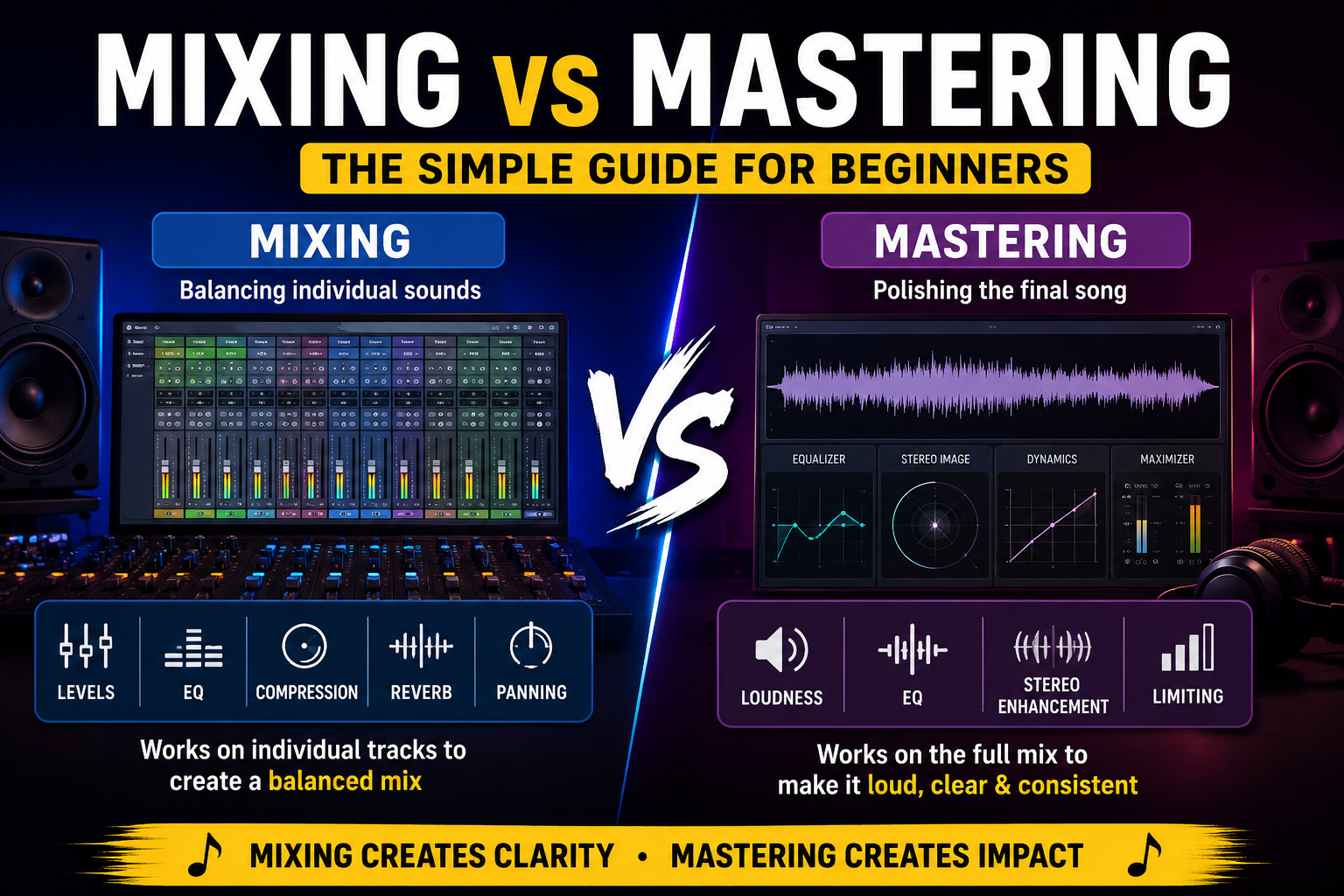
If you are new to music production, you have probably heard producers talk about mixing and mastering. Many beginners think they are the same thing, but they are actually two completely different stages of making a song sound professional.
Understanding the difference between mixing and mastering can help you improve your music faster, avoid common mistakes, and create tracks that sound better on Spotify, YouTube, Apple Music, and radio.
In this simple guide, you will learn:
- What mixing means
- What mastering means
- The major differences between them
- Why both are important
- Common mistakes beginners make
- Easy tips to improve your songs
Let’s break it down in the simplest way possible.
- You May Also Like:
◾Here Are The Hidden Stories Behind Nigeria’s Biggest Music Hits
What Is Mixing in Music Production?
Mixing is the process of balancing all the individual sounds in a song.
After recording vocals, drums, instruments, and effects, everything needs to blend together properly. That is where mixing comes in.
A music producer or mixing engineer adjusts different elements so the song sounds clean and enjoyable.
Things Done During Mixing
Here are some important tasks involved in mixing:
- Adjusting volume levels
- Panning sounds left or right
- Adding EQ (equalization)
- Using compression
- Adding reverb and delay
- Removing unwanted noise
- Making vocals clearer
- Creating space between instruments
Think of mixing like cooking a meal.
You may have great ingredients, but if the balance is wrong, the food will not taste good. Mixing helps every sound fit perfectly together.
Simple Example of Mixing
Imagine listening to a song where:
- The vocals are too loud
- The drums are too weak
- The piano is covering the singer
- The bass sounds muddy
That song needs mixing.
A mixing engineer fixes those issues so everything sounds balanced and professional.
What Is Mastering in Music Production?
Mastering is the final step before releasing a song.
After the song has been mixed, mastering helps polish the entire track and prepare it for streaming platforms, radio, clubs, and headphones.
Mastering focuses on the complete song, not the individual instruments.
Things Done During Mastering
Here are common mastering tasks:
- Increasing overall loudness
- Balancing the final sound
- Enhancing clarity
- Controlling peaks
- Making the song sound consistent across devices
- Preparing the file for distribution
Mastering gives the song that final “professional” shine.
Simple Example of Mastering
Let’s say your song sounds good after mixing, but:
- It sounds too quiet compared to other songs on Spotify
- The sound changes badly on different speakers
- The track lacks punch and energy
Mastering helps solve those final problems.
Main Difference Between Mixing and Mastering
The easiest way to understand the difference is this:
Mixing works on individual elements.
Mastering works on the full final song.
Here is a simple comparison table:
Mixing ¦ Mastering
Balances individual
the final track ¦ Enhances the final track
Adjusts vocals, drums, bass separately| Works on the complete song
Uses EQ, compression, reverb| Uses limiting, stereo enhancement, final EQ
Happens before mastering| Happens after mixing
Focuses on clarity and balance| Focuses on loudness and polish
Why Mixing Is Important
Without good mixing, even a great song can sound amateur.
Good mixing helps:
- Vocals sound clearer
- Instruments fit together properly
- The song feel emotional and powerful
- Listeners enjoy the experience more
Many hit songs sound amazing because of excellent mixing.
Why Mastering Is Important
Mastering is important because it ensures your music sounds professional everywhere.
A properly mastered song will sound good on:
- Phones
- Car speakers
- Bluetooth speakers
- Headphones
- Clubs
- Streaming platforms
Without mastering, your song may sound weak or inconsistent.
Can You Master Without Mixing?
Technically yes, but it is not recommended.
Mastering cannot fully fix a bad mix.
For example:
- If vocals are too loud in the mix, mastering may not completely solve it
- If instruments clash badly, mastering cannot separate them properly
That is why a clean mix is always important before mastering.
Which Comes First: Mixing or Mastering?
The correct order is:
1. Recording
2. Editing
3. Mixing
4. Mastering
5. Distribution
Mixing always comes before mastering.
Common Beginner Mistakes
1. Making Everything Too Loud
Many beginners increase every sound too much.
This creates distortion and removes clarity.
2. Adding Too Many Effects
Too much reverb, EQ, or compression can ruin a song.
Sometimes simple mixing sounds better.
3. Skipping Mastering
Some producers upload songs without mastering them.
This can make tracks sound unprofessional online.
4. Mastering a Bad Mix
Mastering cannot magically repair poor mixing.
Always focus on getting a strong mix first.
Easy Tips to Improve Your Mixing
Use Reference Songs
Compare your song with professionally mixed tracks in the same genre.
Keep the Vocals Clear
Vocals are usually the most important part of a song.
Avoid Clipping
Do not let the audio become too loud and distorted.
Take Breaks
Your ears get tired during mixing.
Short breaks help you hear mistakes better.
Easy Tips to Improve Your Mastering
Leave Headroom
Do not make your mix too loud before mastering.
Check Different Speakers
Test your song on headphones, phones, and speakers.
Use Limiting Carefully
Too much limiting can destroy dynamics.
Keep It Clean
Mastering should improve the song, not completely change it.
Best Software for Mixing and Mastering
Here are some popular tools producers use:
DAWs (Digital Audio Workstations)
- FL Studio
- Ableton Live
- Logic Pro
- Cubase
- Pro Tools
Popular Plugins
- Waves Plugins
- FabFilter
- iZotope Ozone
- Valhalla Reverb
Many beginners start with free plugins before upgrading later.
Do Professional Artists Use Different Engineers?
Yes, many famous artists use separate engineers for mixing and mastering.
For example:
- A mixing engineer balances the song
- A mastering engineer adds the final polish
This helps achieve a higher-quality result.
Is Mixing Harder Than Mastering?
For most beginners, mixing is usually harder because it involves many separate tracks and detailed adjustments.
Mastering is simpler in terms of workflow, but professional mastering still requires skill and experience.
Both are important parts of music production.
Final Thoughts
Mixing and mastering are both essential in creating professional music.
Here is the simplest way to remember it:
- Mixing makes the individual parts sound good together
- Mastering makes the final song sound polished everywhere
If your goal is to make professional-quality music, learning both skills will help you stand out.
Start simple, practice consistently, and improve one step at a time.
Every great producer once started as a beginner.
- External References:
◾Sound On Sound Production Articleshttps://www.soundonsound.com
◾iZotope Beginner Mastering Guideshttps://www.izotope.com
◾FL Studio Official Tutorialshttps://www.image-line.com/fl-studio-learning/