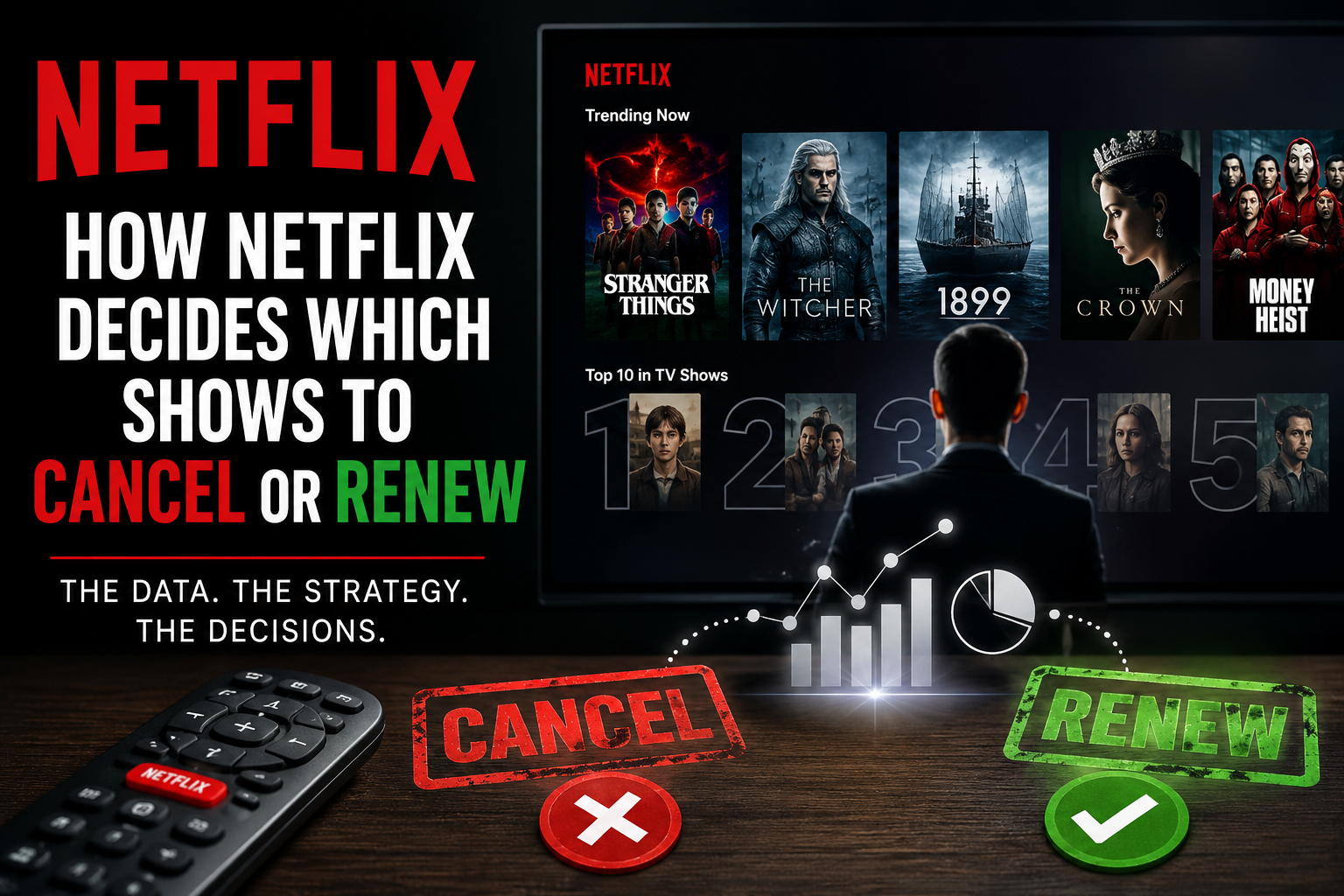
Have you ever fallen in love with a Netflix series only to hear it was suddenly canceled after one or two seasons?
You’re not alone.
Every year, fans around the world ask the same frustrating question: Why does Netflix cancel good shows? While social media often blames “bad decisions,” the truth is more complicated. Netflix uses a combination of data, algorithms, business strategy, and audience behavior to decide whether a show deserves another season.
Unlike traditional TV networks that rely heavily on ratings and advertisements, Netflix works differently. The streaming giant tracks what viewers watch, how long they watch, whether they finish a series, and even if a show helps attract new subscribers.
In this article, we’ll break down exactly how Netflix decides which shows to cancel or renew, the hidden factors fans rarely notice, and why even popular shows sometimes get cut.
Why Netflix Cancels Shows So Quickly
One thing that separates Netflix from traditional television is speed.
TV channels sometimes allow struggling shows to continue because they need scheduled programming. Netflix doesn’t have that problem. Since everything is available on-demand, underperforming content can be removed from future investment faster.
Netflix focuses heavily on:
- Viewer engagement
- Subscriber growth
- Production costs
- Global popularity
- Completion rates
- Long-term profitability
If a show fails in several of these areas, cancellation becomes likely.
The Most Important Factor: Viewership Data
Netflix collects massive amounts of viewing data from users worldwide.
This includes:
How Many People Started Watching
If millions of people watch a trailer but only a small number actually start the show, that’s a warning sign.
A strong opening week matters because Netflix wants shows that generate immediate attention and social buzz.
How Many People Finished the Series
This is one of the biggest hidden factors.
A show may attract viewers initially, but if most people stop after episode two or three, Netflix sees that as weak engagement.
Completion rate matters because it shows whether audiences are genuinely interested or simply curious.
For example:
- High completion rate = strong audience satisfaction
- Low completion rate = viewers losing interest
Netflix prefers shows people binge completely.
Rewatch Value
Some shows become comfort content that viewers revisit multiple times.
Series with strong rewatchability often perform better long-term because they keep subscribers engaged for months or years.
Shows like sitcoms and addictive dramas tend to survive longer because people return to them repeatedly.
Subscriber Growth Is a Huge Deal
Netflix doesn’t only care about views.
The company also asks:
«“Did this show help us gain or keep subscribers?”»
This is extremely important.
If a new series attracts thousands or millions of subscribers, Netflix sees it as valuable even if reviews are mixed.
Similarly, if a show keeps existing subscribers from canceling their memberships, it gains extra importance.
A smaller show with loyal viewers may survive if it helps retain subscribers in key countries or demographics.
Budget vs Profitability
Some Netflix originals are incredibly expensive to produce.
Big-budget fantasy, sci-fi, and action series often require:
- Massive visual effects
- Large casts
- International filming
- Expensive marketing
- Long production schedules
If production costs become too high compared to audience performance, cancellation risk increases.
This explains why some critically acclaimed shows still get canceled.
Even if fans love a series, Netflix may decide the numbers don’t justify another costly season.
Example of the Cost Problem
Imagine two shows:
Show| Budget| Viewers
Show A| $200 million| 20 million viewers
Show B| $20 million| 15 million viewers
Show B may actually be more profitable despite having fewer viewers.
That’s why cheaper reality shows and documentaries often survive longer than expensive scripted dramas.
Global Popularity Matters More Than Ever
Netflix is a global platform, not just an American streaming service.
A show that performs moderately in the U.S. but becomes huge internationally may still get renewed.
Netflix tracks popularity in regions like:
- Europe
- Asia
- Latin America
- Africa
- Middle East
This is why international shows now receive more investment.
Series like foreign-language thrillers and Korean dramas can succeed worldwide if they attract global audiences.
Social Media Buzz Can Influence Decisions
While data matters most, online conversation still plays a role.
Netflix pays attention to:
- Trending hashtags
- TikTok clips
- Meme culture
- Fan campaigns
- Online discussions
A show generating strong internet buzz gains free marketing.
Sometimes social media popularity can even revive interest in an older series.
However, online noise alone usually isn’t enough to save a show if the actual viewing numbers are weak.
Critical Reviews Are Less Important Than Fans Think
Many viewers assume good reviews guarantee renewal.
Not necessarily.
Netflix prioritizes audience behavior over critic opinions.
A critically acclaimed show with low engagement may still get canceled, while a poorly reviewed but heavily watched series may continue for years.
From a business perspective, viewer retention matters more than awards.
- You May Also Like:
◾New Masters of the Universe Clip Gives Fans the Most Epic He-Man Transformation So Far
Why Netflix Loves Limited Series
You may have noticed Netflix increasingly releases “limited series.”
There’s a reason for that.
Limited series:
- Reduce long-term financial risk
- Avoid fan backlash from cancellations
- Encourage binge-watching
- Create fast hype cycles
Instead of committing to multiple seasons, Netflix can produce one strong story and move on.
This strategy helps control costs while constantly refreshing the platform with new content.
The “Three-Season Curse” on Netflix
Many fans have noticed Netflix often cancels shows after three seasons.
This happens partly because contracts become more expensive over time.
As actors, writers, and production teams renegotiate deals, costs rise significantly.
If viewership growth slows by season three, Netflix may decide the return on investment no longer makes sense.
This business reality has created what many viewers call the “Netflix three-season curse.”
Can Fans Save a Canceled Netflix Show?
Sometimes.
Fan campaigns occasionally influence streaming platforms, especially when:
- A show has passionate audiences
- Merchandise sells well
- Another platform shows interest
- Social media campaigns go viral
However, successful revivals are still relatively rare.
In most cases, Netflix’s internal data carries more weight than online petitions.
What This Means for Viewers
Understanding Netflix’s renewal system changes how we view cancellations.
A canceled show doesn’t always mean it was “bad.”
Sometimes it simply means:
- Too expensive
- Not enough completion rate
- Weak subscriber impact
- Low global reach
- Declining engagement
Streaming platforms operate heavily on analytics and business strategy, not emotion.
That’s why even beloved series can disappear unexpectedly.
Final Thoughts
Netflix’s cancelation and renewal decisions are driven by one core question:
«“Does this show provide enough value for the company and subscribers?”»
To answer that, Netflix analyzes enormous amounts of data, including viewership trends, audience retention, production costs, global reach, and subscriber growth.
While fans may never fully agree with every decision, understanding the business side makes the process easier to understand.
The next time your favorite Netflix show gets canceled, it may not be because nobody watched it. It could simply be that the numbers didn’t work in Netflix’s favor.
And in the world of streaming, numbers often matter more than passion.
- External References:
◾Watch TV shows, movies, and Netflix Originalshttp://netflix.com
◾Netflix About / Platform updates, press information, and streaming service detailshttp://netflix.com
◾Netflix Investor Relations – earnings reports, subscriber data, and financial performancehttp://ir.netflix.net